How to Actually Check Your Home for Hidden Monsoon Damage

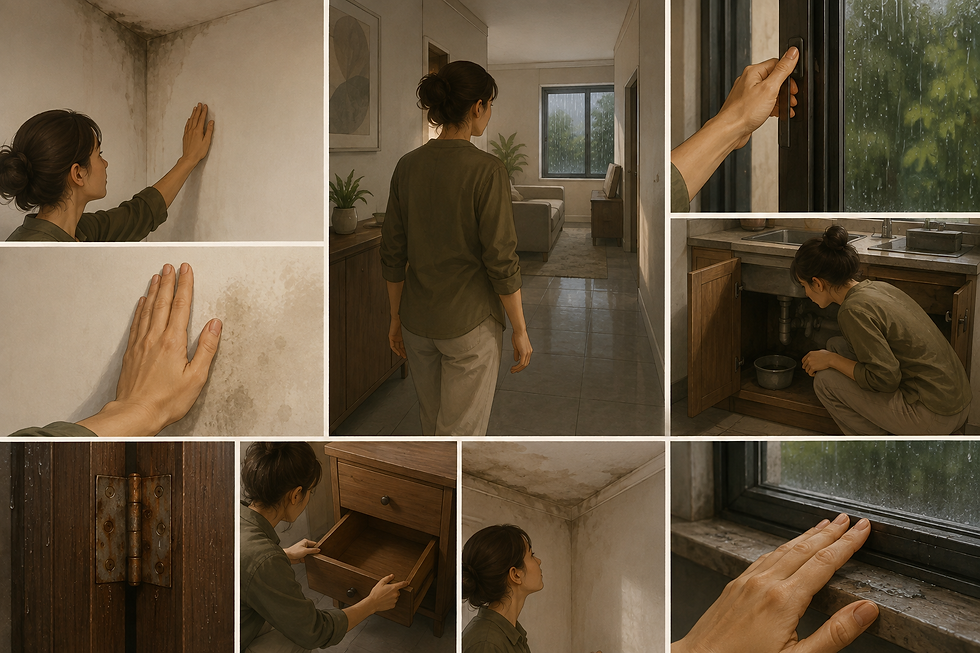
I do the same walk every September.
Not a deep clean. Not a repair job.
Just a walk, room by room, hand on every wall….
Most monsoon damage doesn’t announce itself. It hides in places you’d only notice if you were actually looking.
So here’s the walk, if you want to do it too.
Start with the corners, not the middle of the wall. Damage almost always shows up where two walls meet, or where a wall meets the ceiling, first.
Press your palm flat against any wall that faced the rain.
Cool or slightly damp means it’s not done drying, even if it looks fine.
Open every door and drawer in the house. Not just the ones you use daily. The ones that stick are telling you something the ones that don’t aren’t.
Check under sinks and behind furniture pushed against outer walls. These spots trap moisture and nobody looks there until something smells off.
Run your hand along window frames and door hinges. Rust starts as a rough patch, long before it looks like rust.
Look up, not just around. Ceiling corners near windows or terraces are where slow leaks show first.
None of this takes long. Fifteen minutes, maybe twenty.
But it’s the difference between catching a damp patch while it’s still just a patch, and finding it again in December as a much bigger job. Journalising Designers Esha Bhandari

